
98 Kilometres. 24 Hours. No Fins. One Breath at a Time.
Dec 05, 2025A Day to Remember
9am, Saturday 22 November at Tattersalls Club, Sydney. This was the moment we’d been preparing for all year, yet as the start drew closer, the pressure built. Time was moving too fast, the printer refused to cooperate, the livestream wasn’t working, but Flo, Derek and Jack were doing their magic. Although my family was standing behind me, I couldn’t give them any attention. Volunteers were checking equipment, divers were warming up, and I felt the weight of this moment. Then Kathryn gave me a hug – a hug I’ll be able to repay exactly 18 hours later – and simply said, “Take a breath, it’ll be OK.” Teamwork makes the dream work — a quote I never really connected with until this very moment.
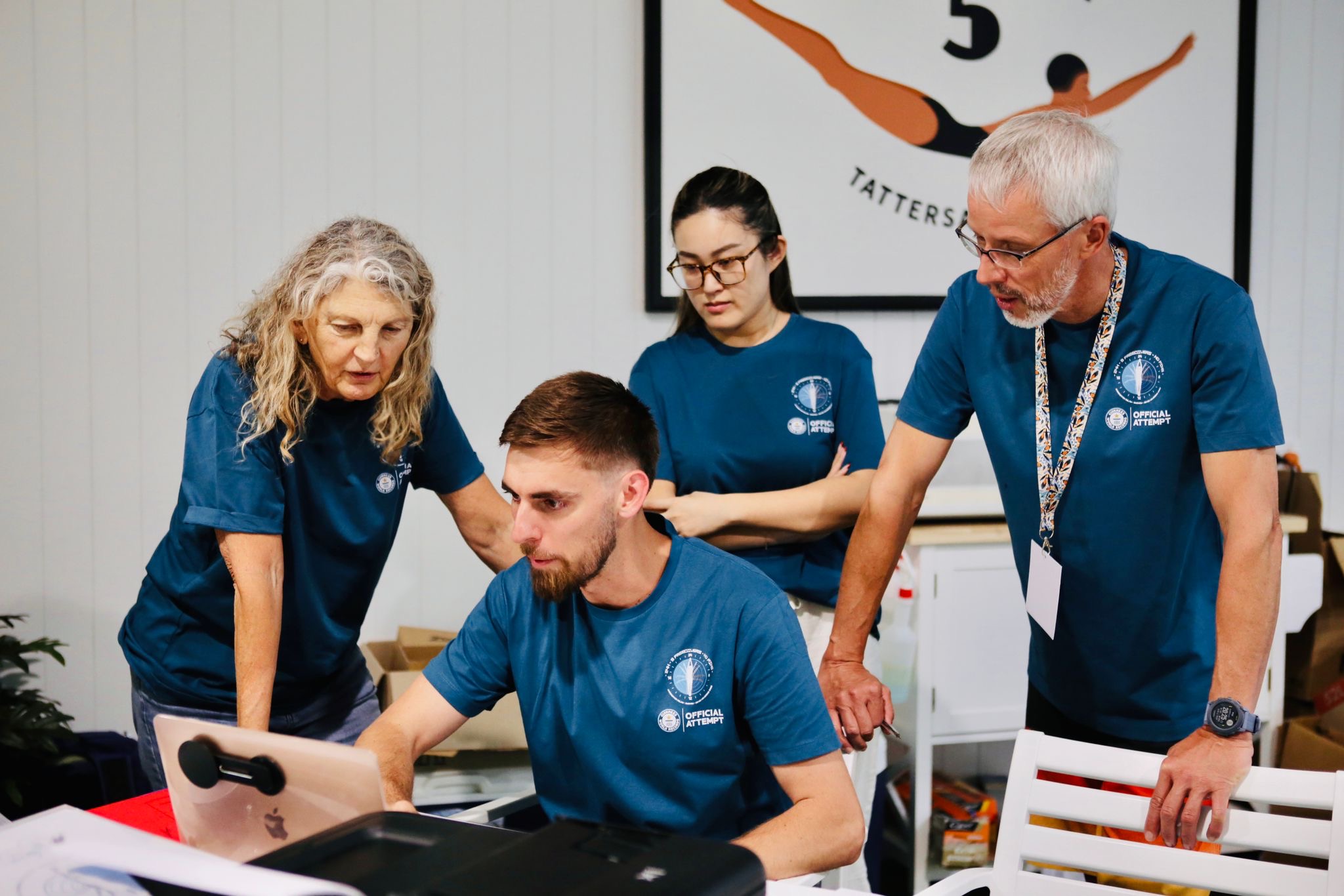
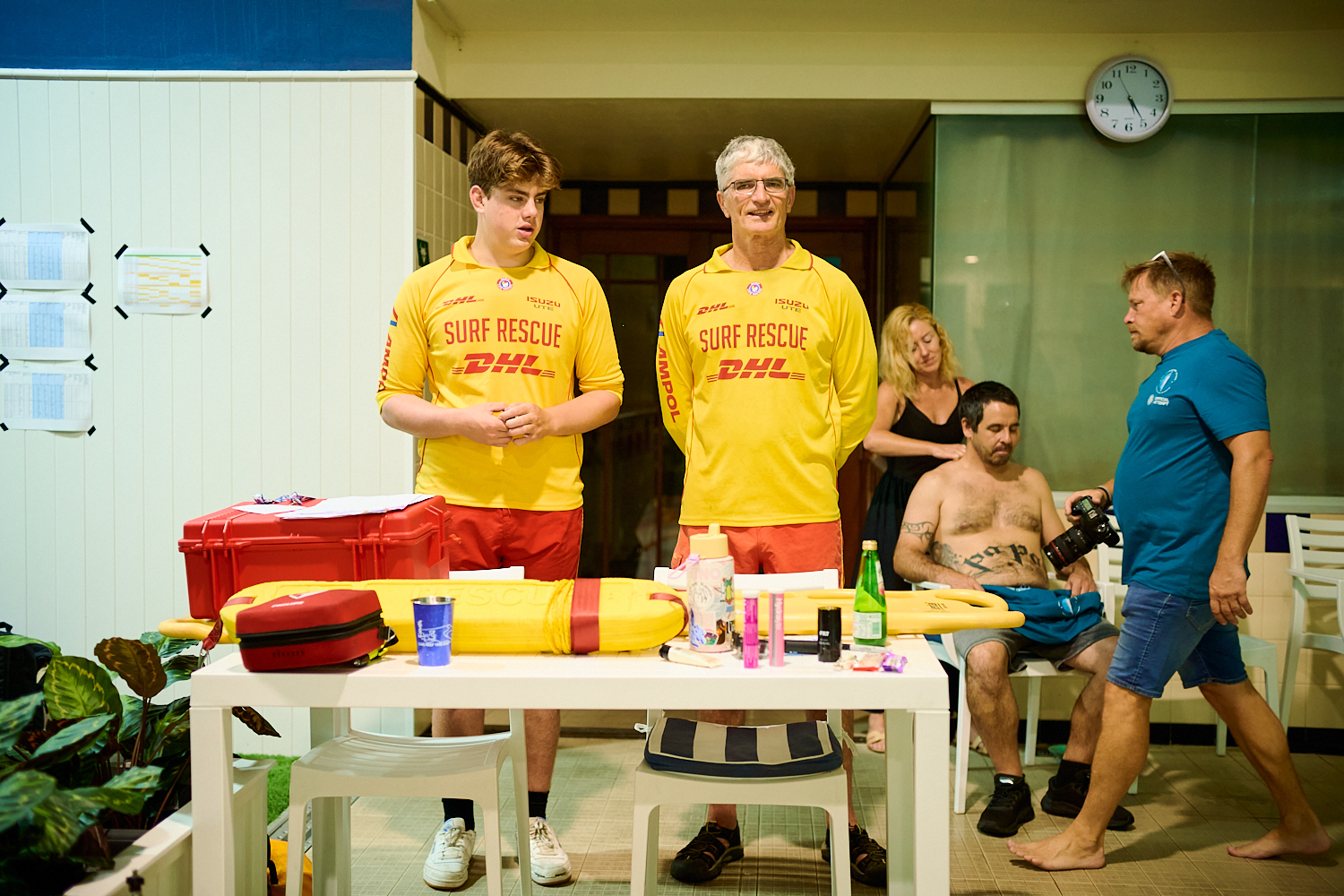
Once the event officially begins, the scale of this undertaking becomes very real. We have 24 hours of continuous video recording, photographers capturing nearly everything, and medical team from Long Reef SLSC on standby who make us weigh ourselves after each one-hour session to see if we're keeping hydrated. We happily oblige — it makes us feel important.

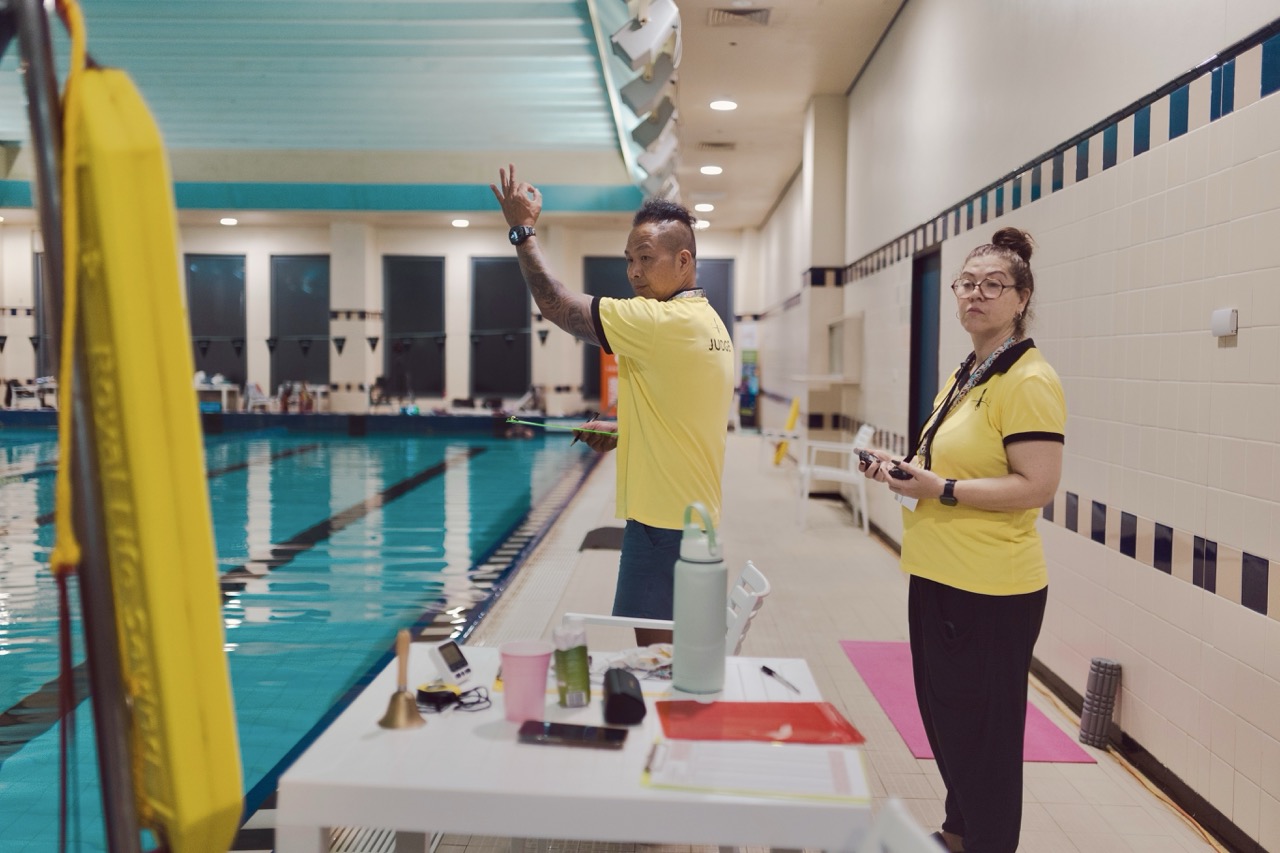
There are official AIDA judges, independent witnesses and incredible support staff rotating through their shifts. Every lap count, spreadsheet, witness statement and photo will later become part of our evidence for Guinness. In the water, there are three freedivers alternating each lap. We rotate every 20 minutes, one in and one out, without ever breaking the underwater chain. The boys set the tone early with 18–19 second 25m laps — blisteringly fast for No Fins — and it lights up the energy of the whole pool.

I enter the water for the first time just before 11am. By now the volunteers have fallen into a rhythm, each person contributing at least four hours, many committing much more. Their calm presence keeps everything steady. It takes me a moment to adapt to the pace: I watch the diver’s hand touch the wall, then I leave instantly, no hesitation. We knew this could be risky — it’s easy to go too early — but everyone is switched on and moving with precision.
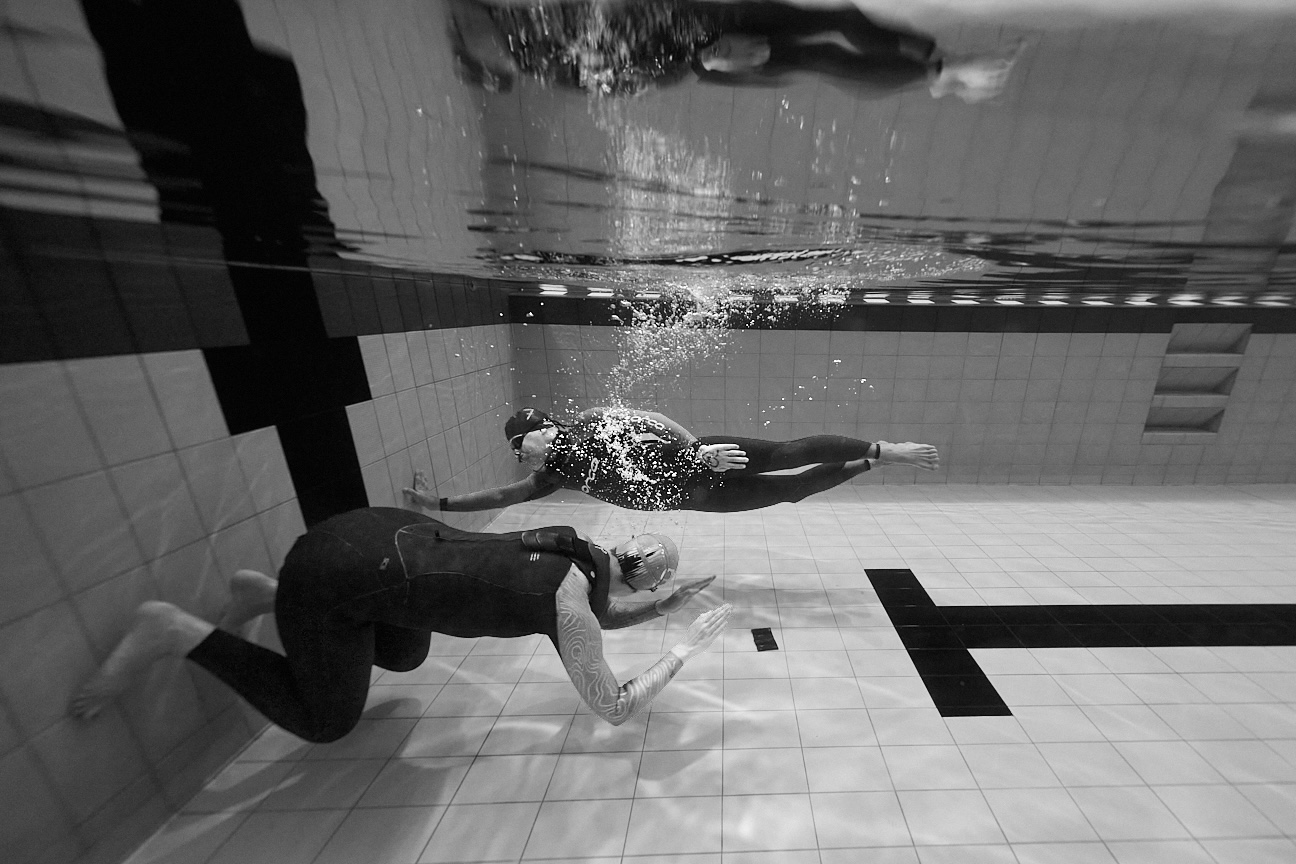
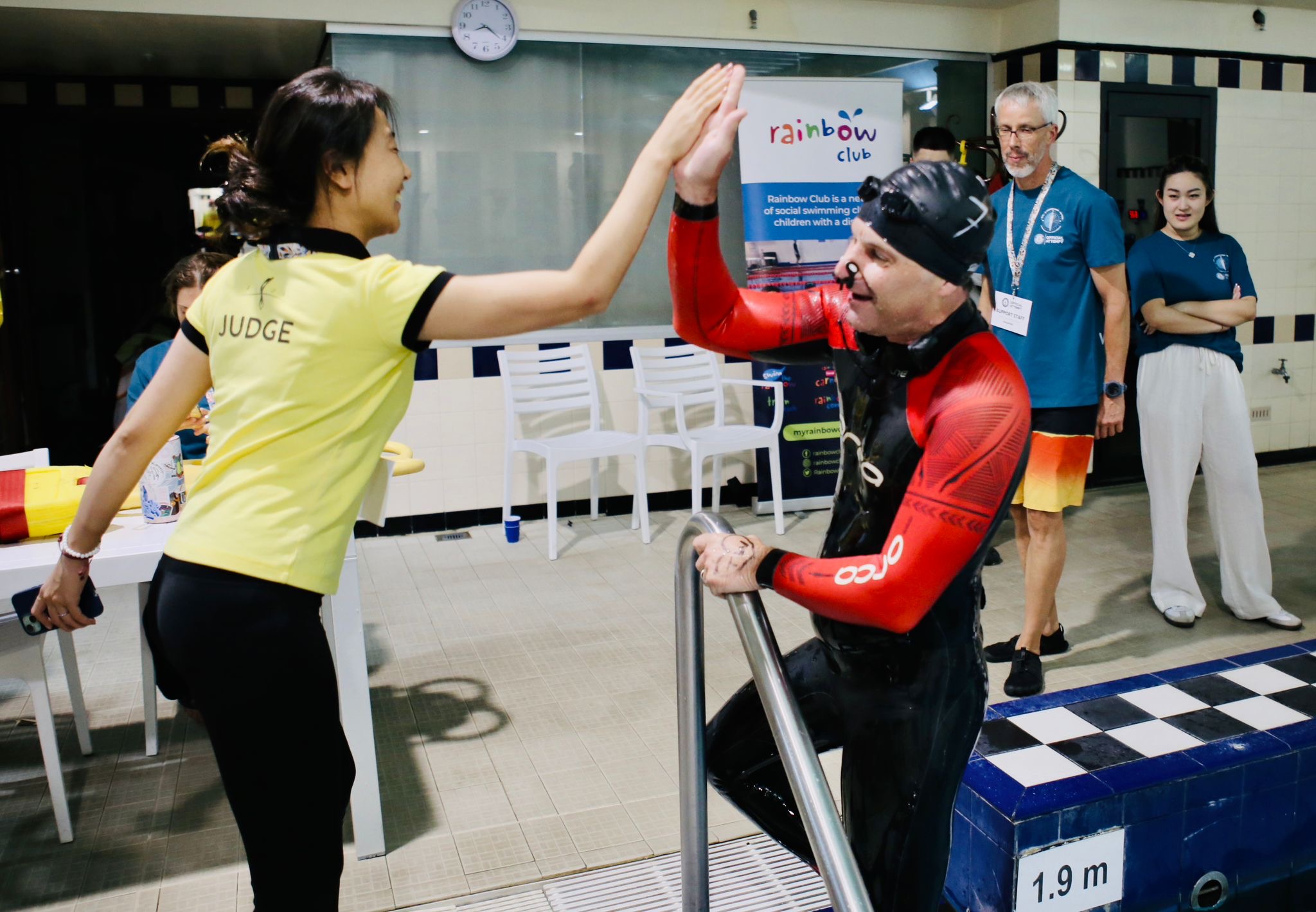
After every hour-long shift, the next diver surfaces to loud cheers, hugs and encouragement from the deck. That cycle repeats every 20 minutes and becomes the heartbeat of the whole event.
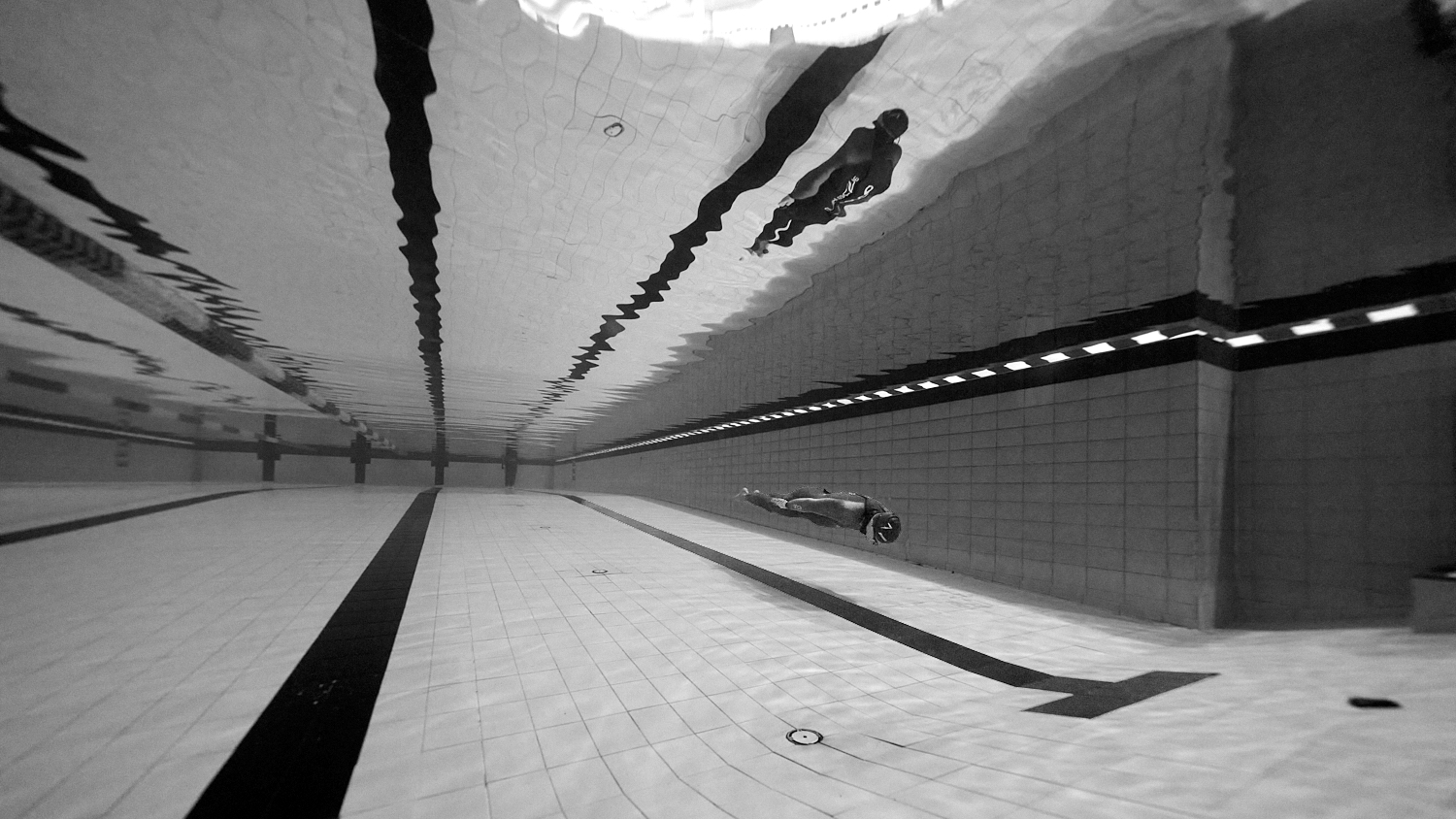
Once I find my own groove, the hours begin to melt together. On deck, the big clock seems to run too fast, but underwater, time goes slowly. It takes about 20 minutes for my body to stop resisting the effort; then suddenly it accepts the mission. Three strokes, around 22 seconds per lap, smooth and efficient. Underwater I repeat the same quiet mantra: soft power…speed...efficiency...I rely on the thousands of laps I’ve done before, the hours of technique work, the connection with water that reminds me why I do all this in the first place.
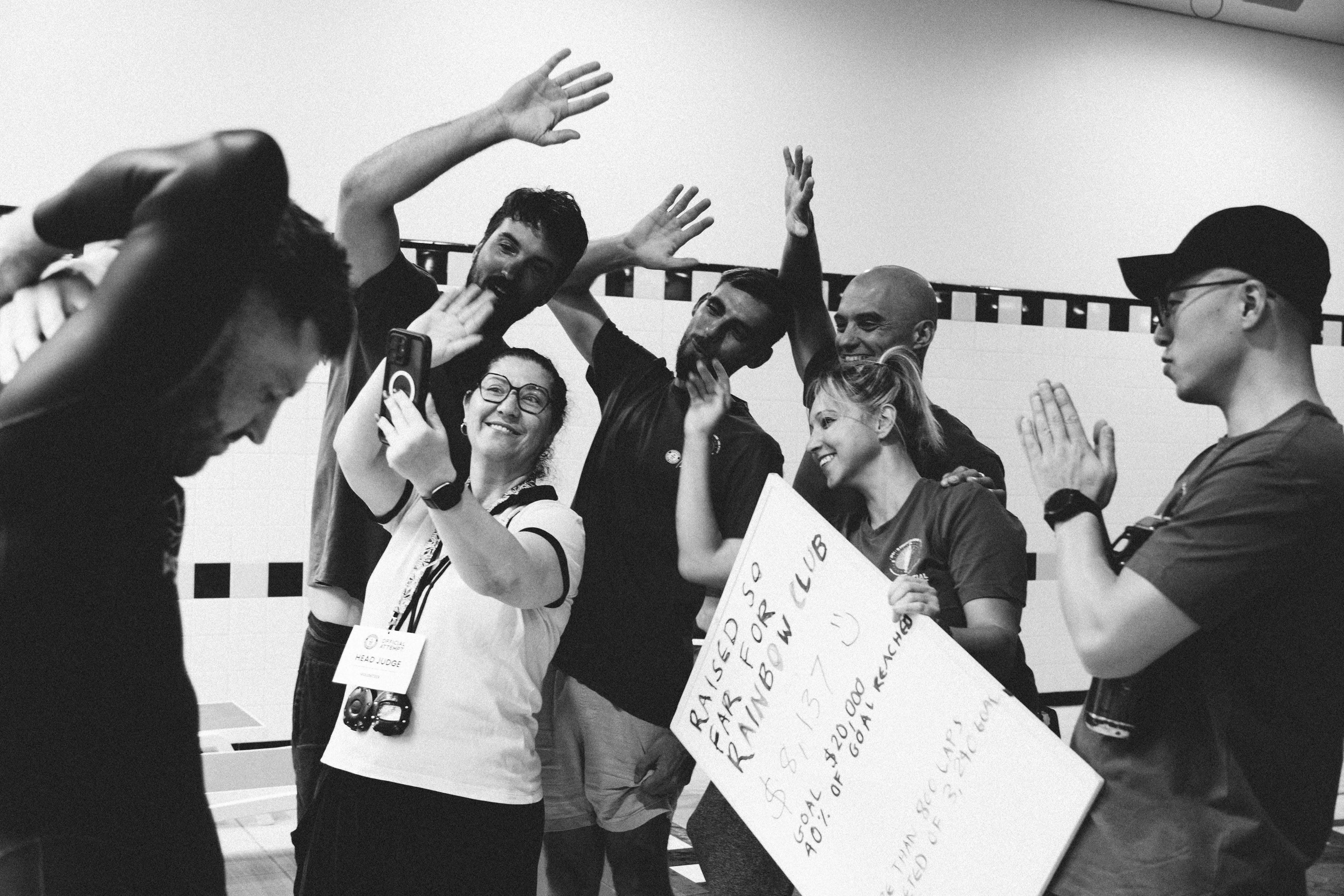
By the afternoon, the whole team seems to be flying. Between shifts we exchange quick comments — sore legs, good energy, feeling strong. The food table becomes a source of joy and fuel, and for once, I actually have an appetite while freediving. At around 3pm, we cross 1,000 laps and $8,137 raised for Rainbow Club. A few thousand laps — and a few thousand dollars — still to go…
Every diver has a number and a matching duck, which the volunteers use to identify us — a simple system that turns out to be both effective and delightfully entertaining. We hardly notice when the sun goes down.
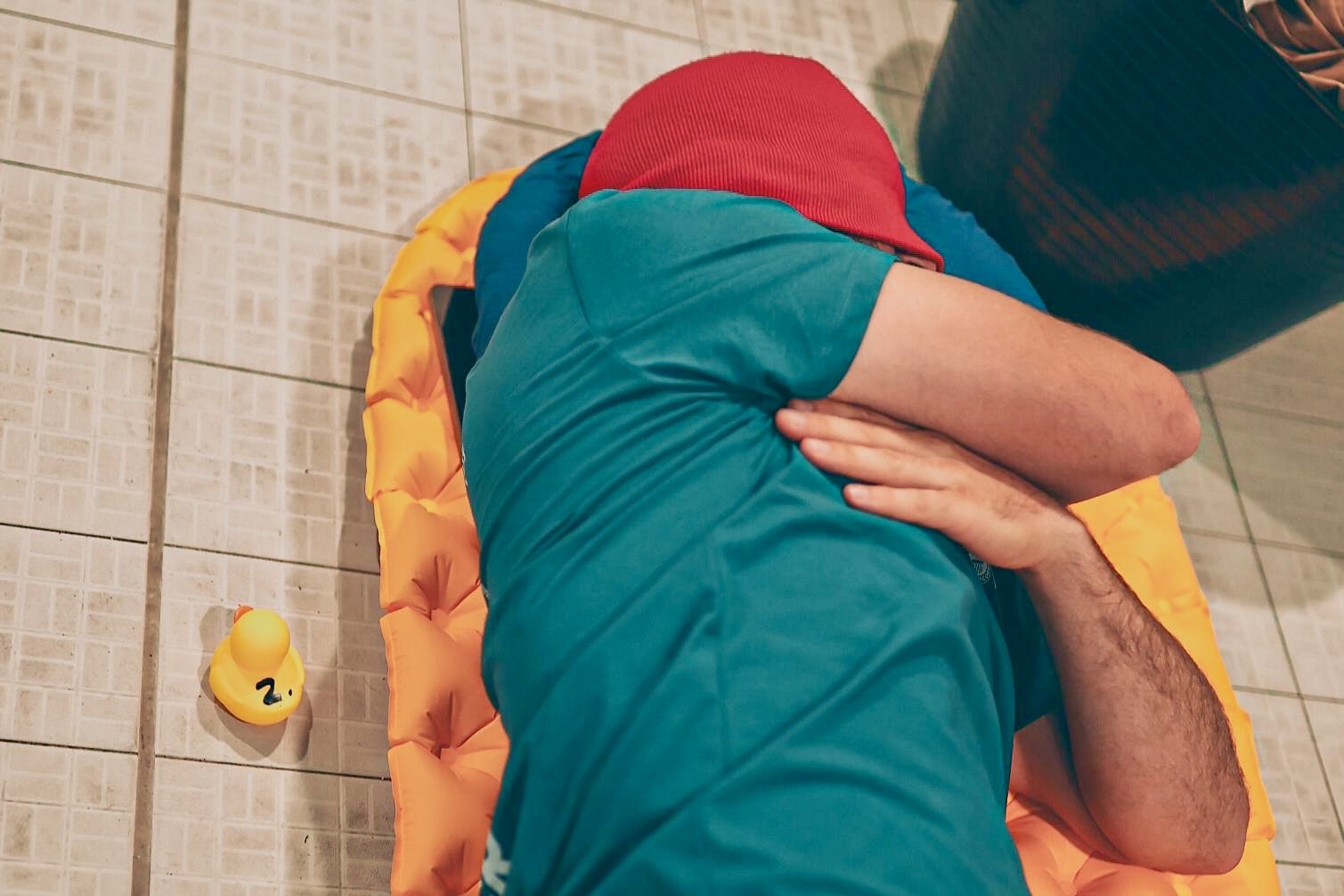
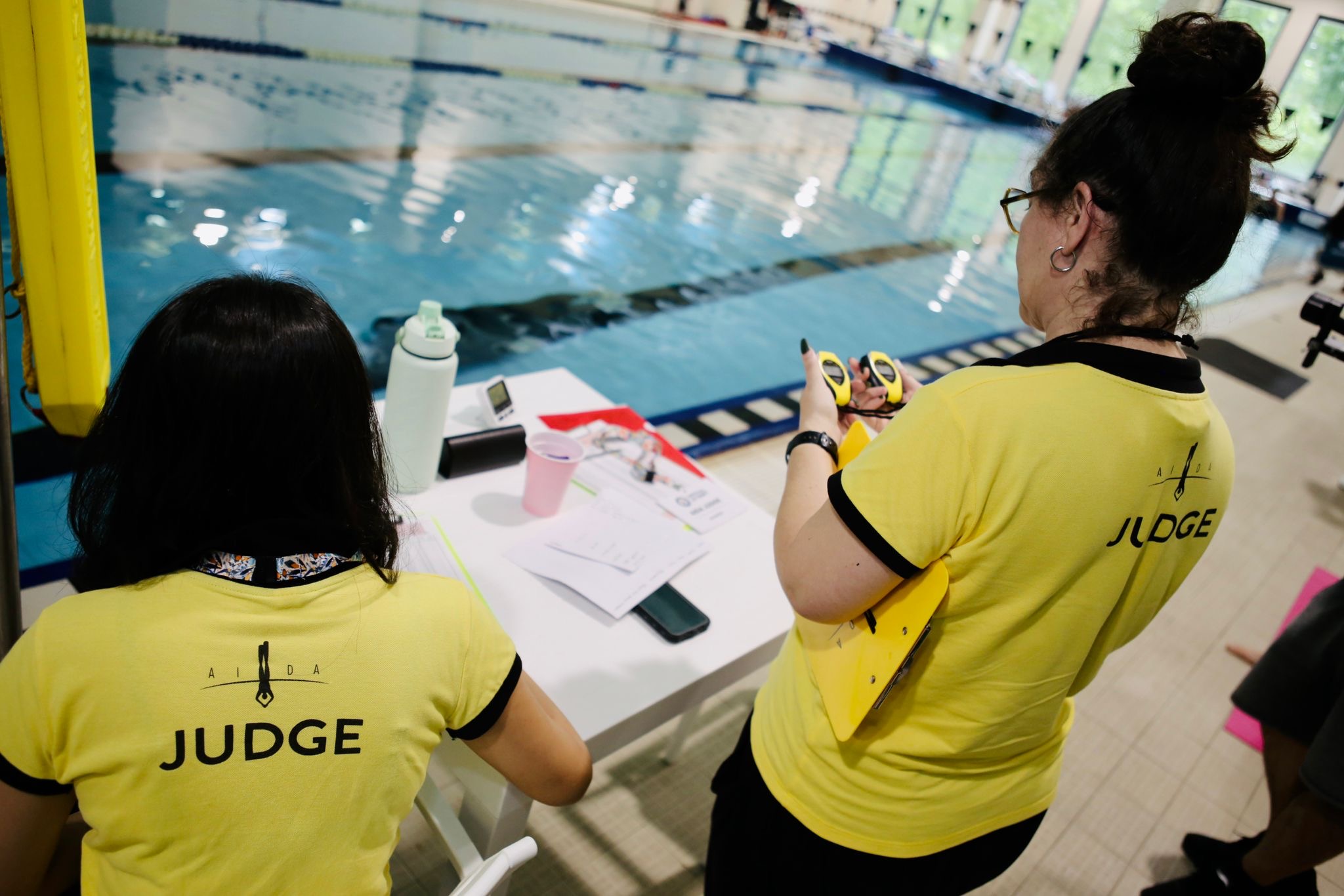
Volunteers continue to rotate in and out, arriving with fresh smiles, new hugs, words of encouragement and even jokes. The judges remain sharp despite the long hours; they observe everything, count everything, and still manage to crack a smile or offer a compliment when we need it most. Around the pool deck, divers set up little resting stations with towels, mats and jackets. We’re not allowed to leave the venue, so every corner becomes a temporary home between our shifts.
As night settles in, fatigue begins to show. My friend Rebecca arrives with a massage table and instantly becomes everyone’s favourite person. Underwater, the overhead lights cast my shadow onto the tiles, and I recognise my silent training buddy — a reminder to keep my form long and my strokes powerful. Some divers start adjusting their movement to protect tired muscles. Jarrod’s knees are complaining, so he switches to arm-driven laps and still manages 20–21 seconds. Wow! The determination and power of this group is unbelievable.
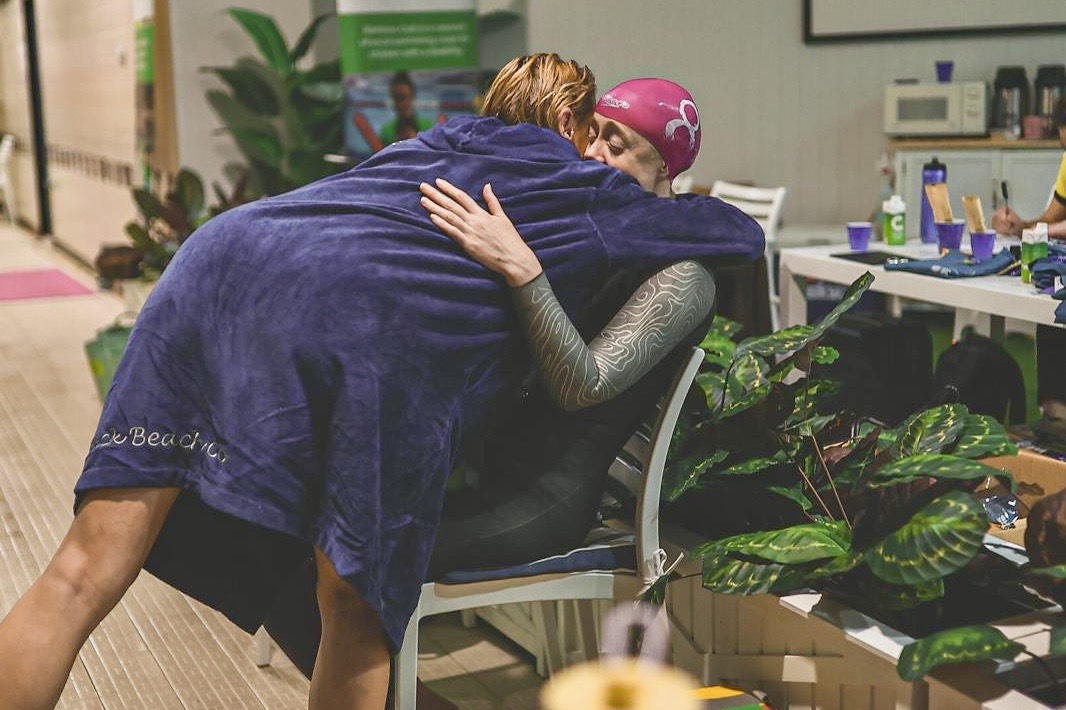
The first seven hours of diving carry me to midnight. When I try to lie down, my body twitches and refuses to relax. I can hear Kathryn next to me also struggling to rest. At 3am, after putting on a warmer suit, I give her a hug - I see you and I feel the same way.
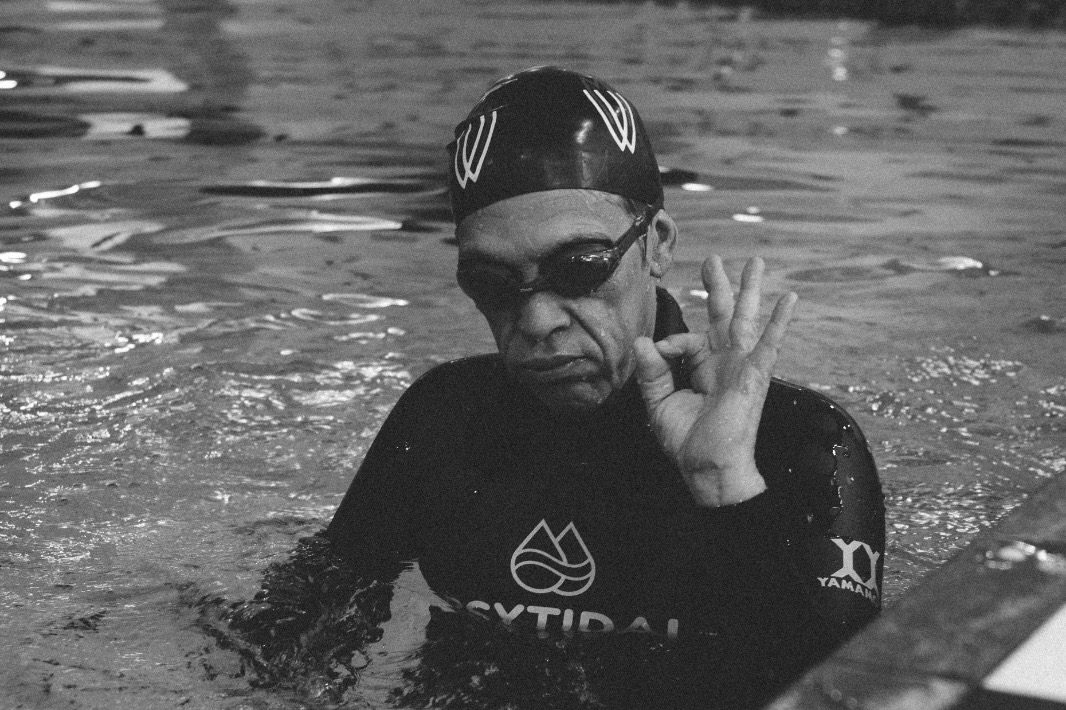
Bill, the most "experienced" member of our team at 61, is still powering through his laps as if it’s mid-afternoon, not the middle of the night. Watching him makes me proud — I’ve seen his life transform through breathwork and connection with water over the past two years
As it gets dark and quiet, I remind myself not to look at the clock and to just keep moving. The deck is calm now but still full of subtle activity: volunteers checking sheets, judges counting laps, cameras recording every push-off and glide.
We cross the intended goal of 81km at around 5am. A little celebration… then we keep diving. We're not done yet.
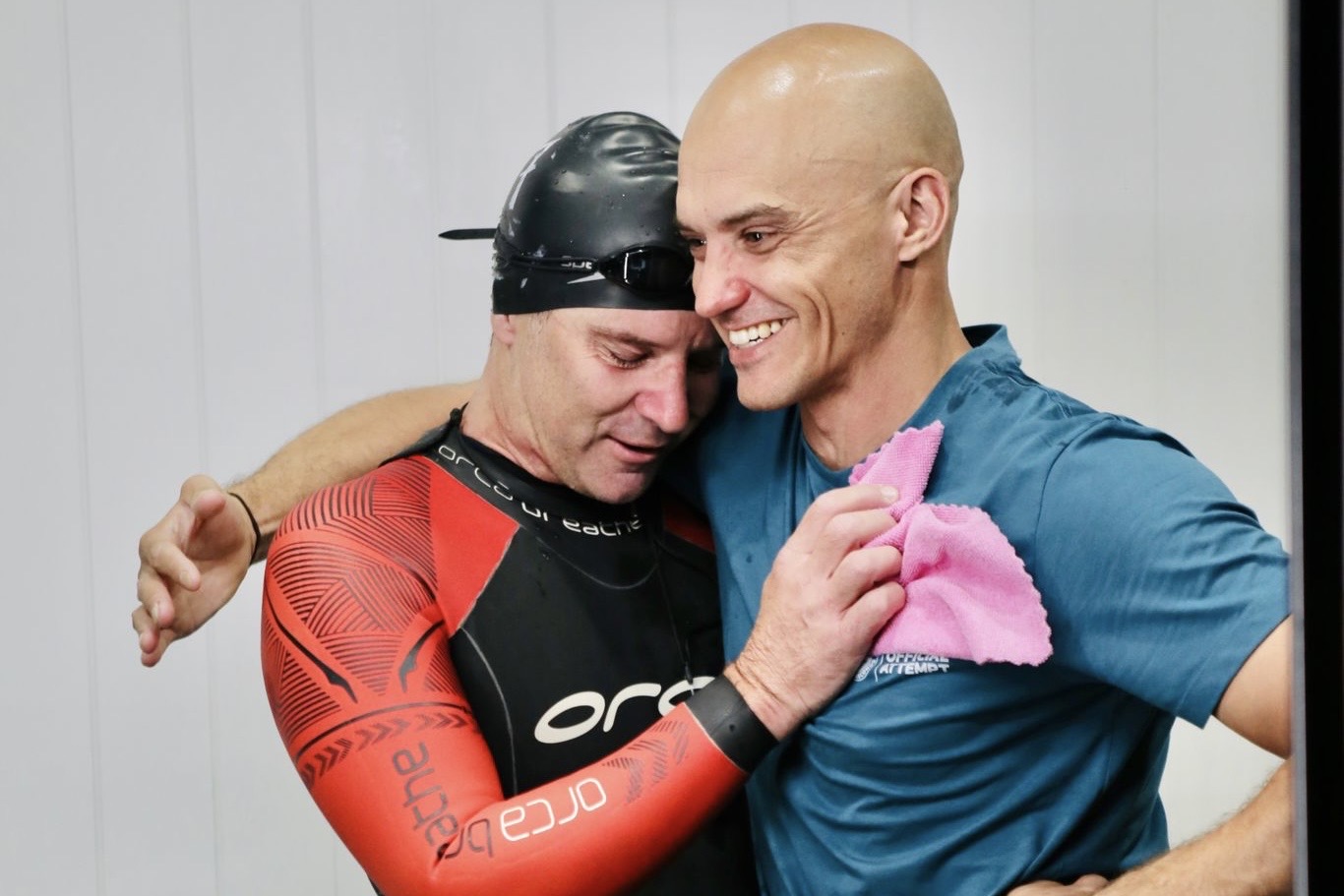
By 6am, the fatigue runs deep. Some of us are in the verge of tears from sheer exhaustion, finding comfort in each other’s arms. When I try to stand, my whole body twitches uncontrollably — but I know exactly what I still have to do.
By 8am, every lap requires willpower. My technique is still there — now four strokes per 25m — but my speed has drifted to about 24 seconds. I’m not disappointed; I’m simply cooked. We’re edging towards 100km, having done only two disallowed laps with two minor mistakes… I’m so proud of the team’s effort.
Instead of focusing on the number, I choose to enjoy and be super present with each lap, especially when my family arrives again. Seeing them at the edge of the pool, hearing their voices and feeling their pride each time I surface fills my goggles with tears of joy and gratitude.
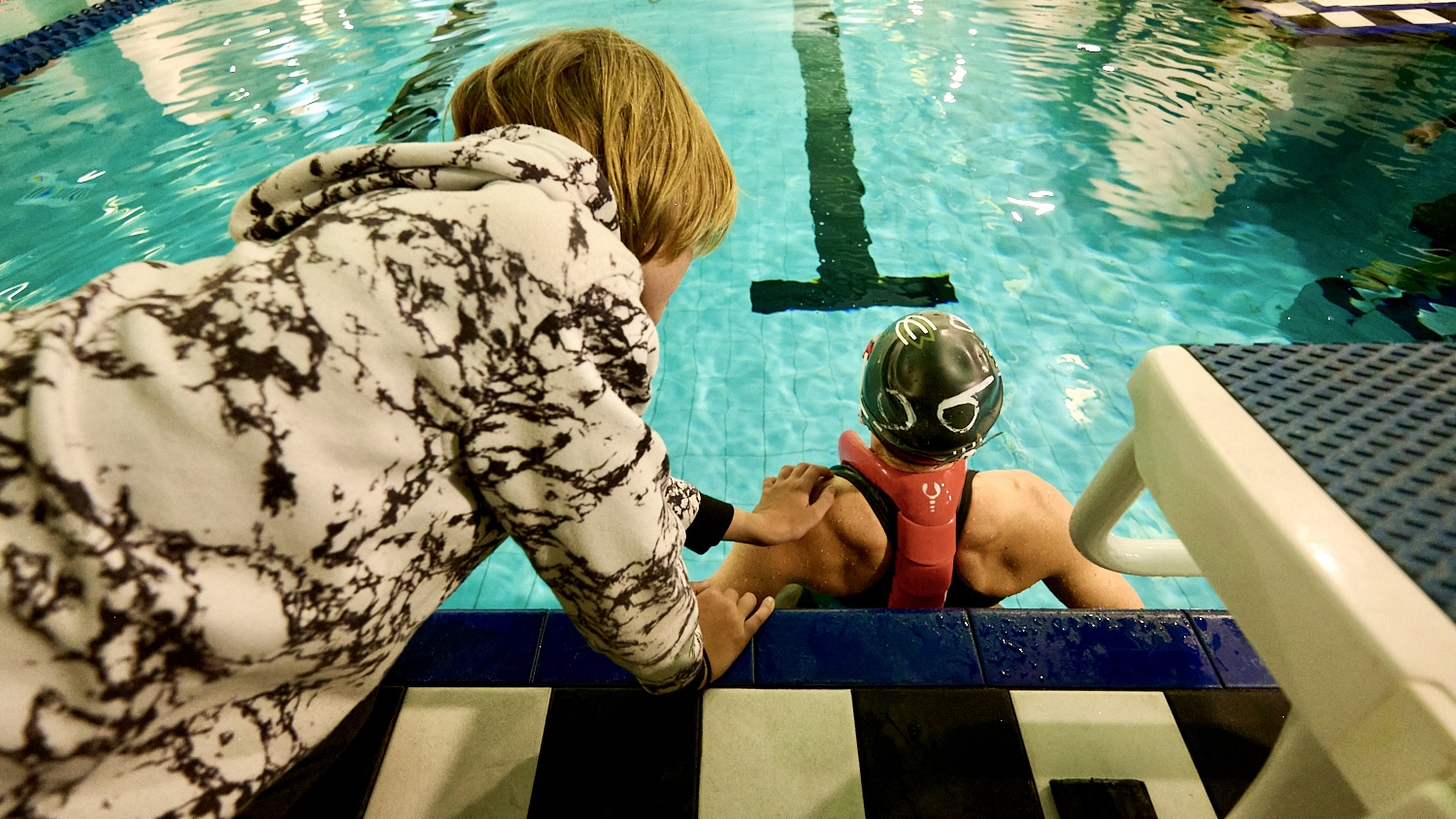
We finish at exactly 98km at 9am. The cheers are huge, but everything feels dreamlike, as if it’s all happening underwater.
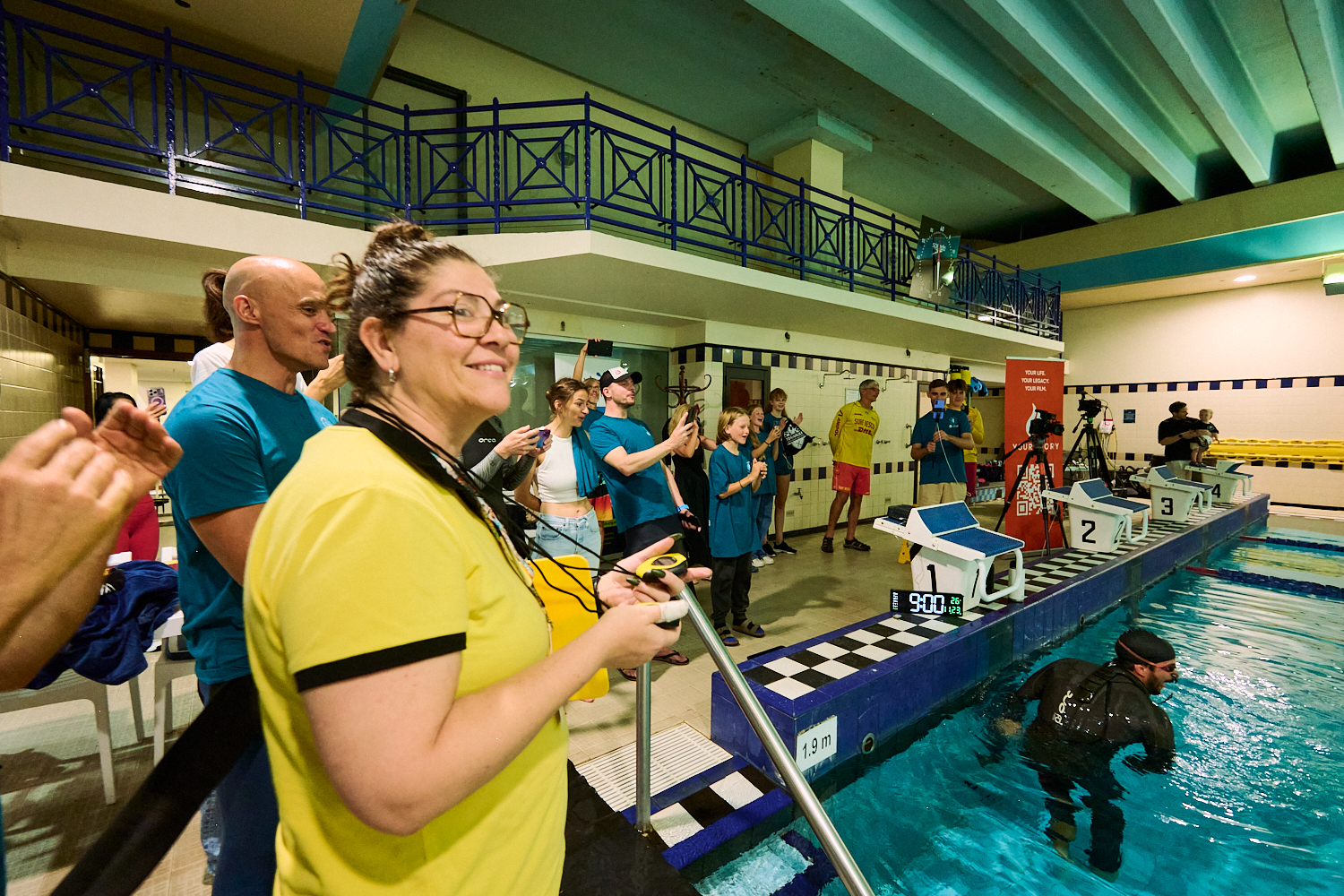
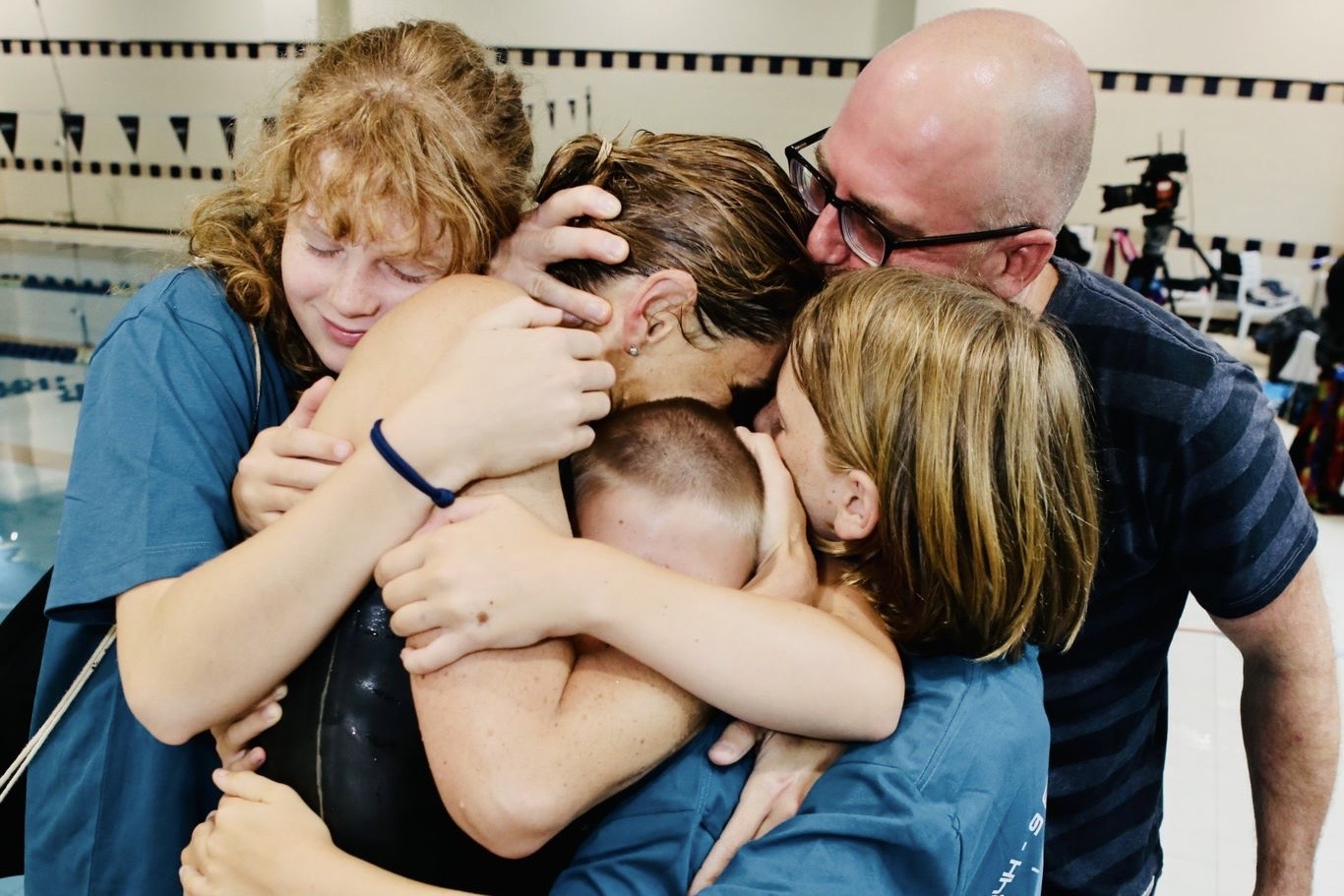
The chlorine has left its mark — everyone is sneezing, coughing and rubbing red, irritated eyes. After 24 hours at the pool, we are totally exhausted, proud, bonded and deeply grateful. Diving, resting, diving again, supporting one another through every wave of fatigue — this event was as much about team work as it was about speed, technique and endurance.
Some of the lessons learned through this experience:
-
No dream is a solo act. It always takes a team to bring it to life.
-
We discover who we really are on the edge of discomfort.
-
Age is just a number. If we stay fit, sharp, and don’t give up, anything is possible at any stage of life.
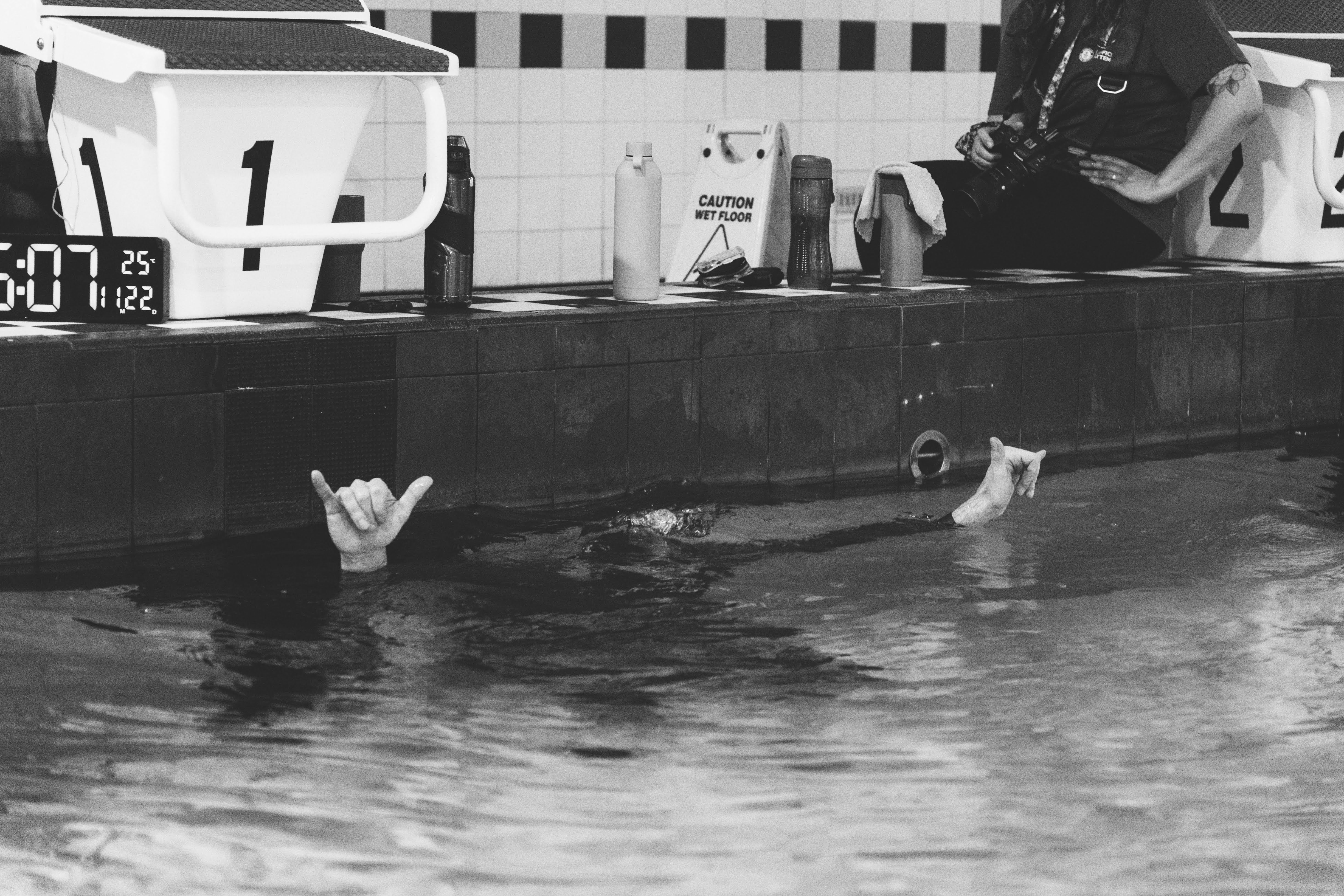
The Numbers Behind the Madness
-
Duration: 24 hours (9am - 9am)
-
Number of freedivers: 9 (31-61)
- Number of volunteers: 36
-
25m no fins laps completed: 3,918
- Number of disallowed laps: 2
-
Average speed per lap: 22.04 seconds
-
Money raised for Rainbow Club: $10,895
-
Official page: www.81kmworldrecord.com
The "Fight Club":
Shortly before 9am the next day...our eyes tell the story...
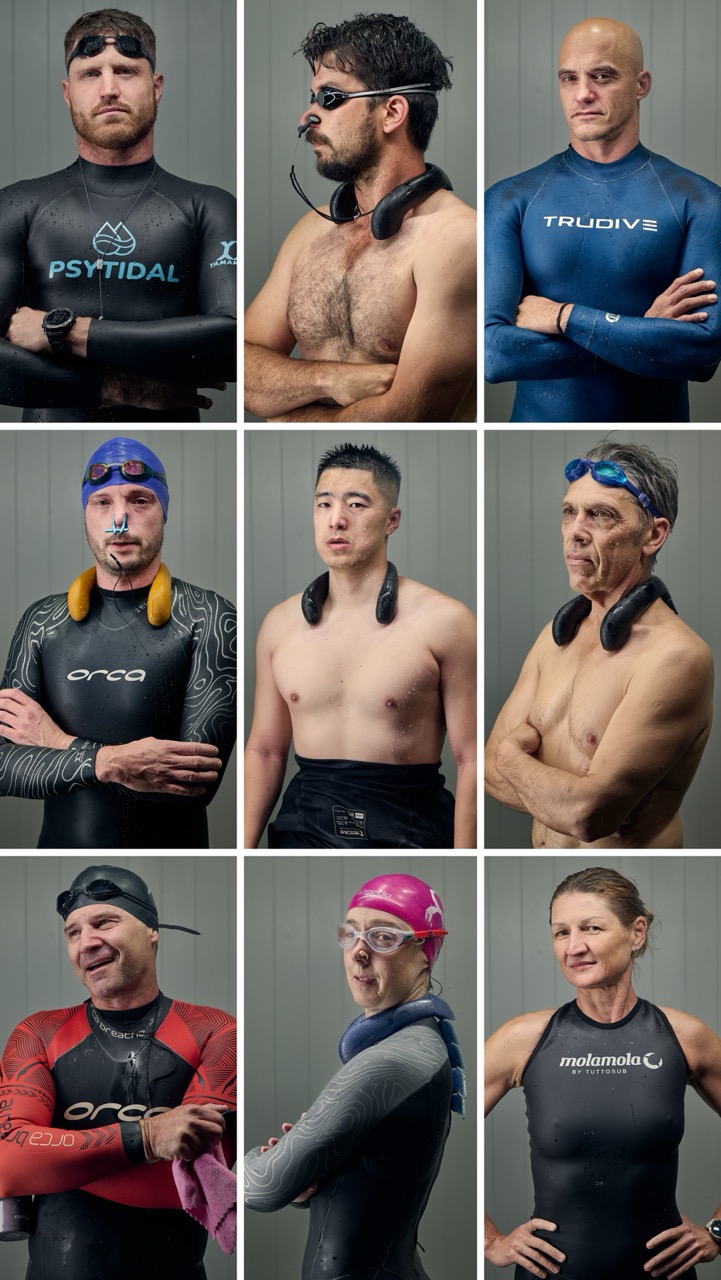 Official Photography: Eric Yip , Marek Veverka, Florencia Calvo, Tessa Ucchino
24h Videographer: Derek Abel / Your Story


